

 Email Management
 Artificial Intelligence
 Physical Archive Management
 Document Lifecycle
 Library Management
 Security and Compliance
 QR Code Generator
 McFile for Office 365
 McFile for Business Central
 McFile for Outlook
 Electronic Signature
 Compliance
 Legal
Legal Construction
 Human Resources
 Energy
 Healthcare
 Project Management
 Digitization Services
 Educational Institution
 Retail
 Cases
Cases Blog
Blog What’s New
 About us
 For developers
 For Users
 Contact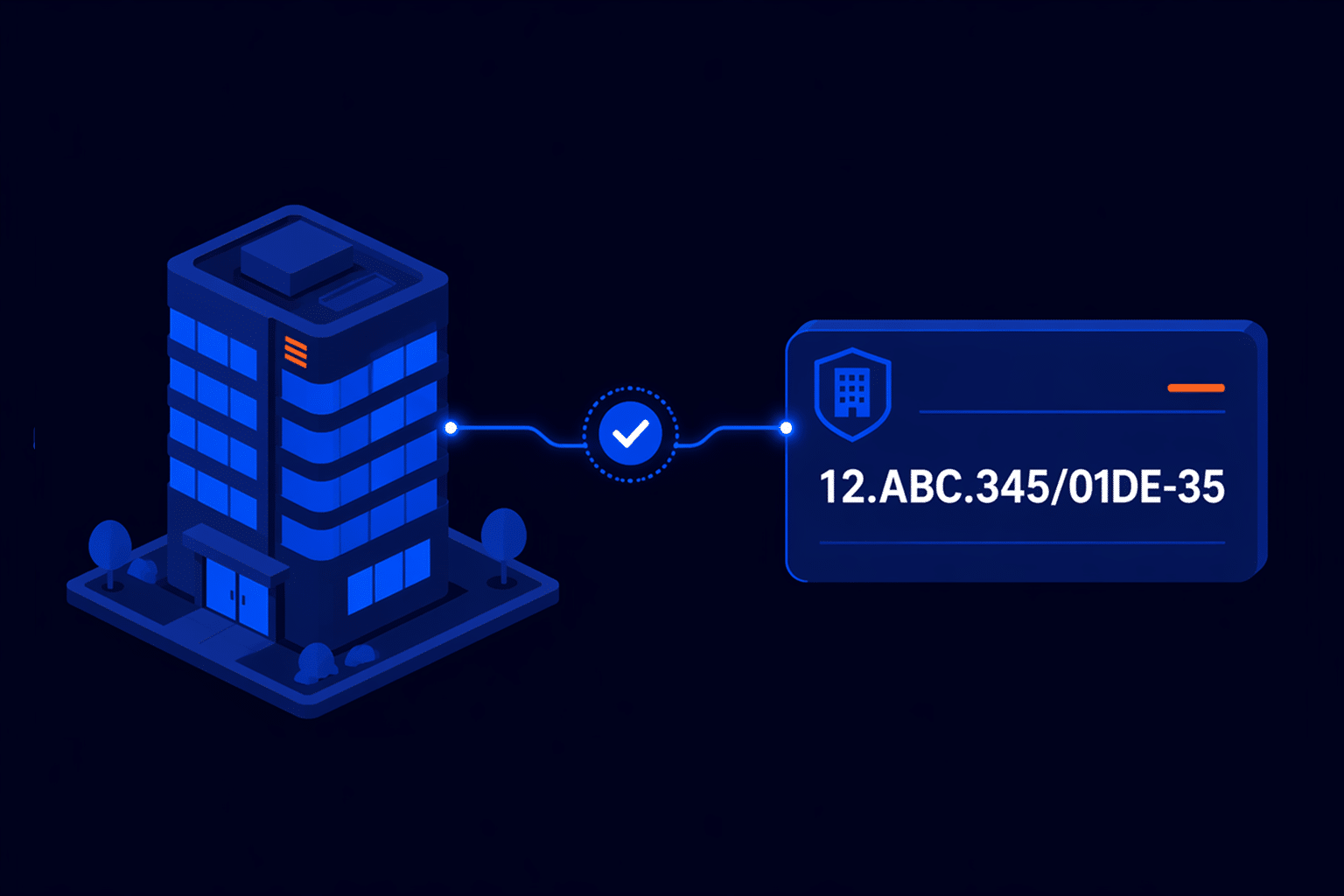
Has your company just had an invoice rejected because the system didn’t recognize a CNPJ with letters? Starting July 31, 2026, this kind of error will become increasingly common, not because of a problem with your registration, but because Brazil’s Federal Revenue Service (Receita Federal) is changing how it identifies legal entities across the country.
What’s changing in the CNPJ?
Brazil’s Federal Revenue Service (Receita Federal) begins rolling out the alphanumeric CNPJ on July 31, 2026, a new format for identifying legal entities that combines letters and numbers while keeping the same 14 characters as today’s model.
The change is set out in Normative Instruction RFB No. 2,229/2024 and Technical Note COCAD/SUARA/RFB No. 49/2024, and it solves a concrete problem: the purely numeric format is close to running out. Brazil already has more than 60 million registered legal entities, and the steady formalization of MEIs (Brazil’s micro-entrepreneur category), branch offices, condominiums, and rural producers is quickly using up the remaining combinations.
With letters now allowed in the first 12 positions, the universe of possible combinations jumps from tens of millions to nearly a trillion.
The structure of the new number
The alphanumeric CNPJ keeps the same 14 positions and the same underlying logic:

The first 8 positions form the root, the next 4 identify the establishment order, and both now accept uppercase letters. The last 2 characters remain exclusively numeric, serving as check digits.
Who needs to do something (and who doesn’t)?
- Already registered companies don’t need to do anything. The current CNPJ remains valid, with the same check digit, and requires no new CNPJ card, no changes to company bylaws, and no reissued documents.
- The new format applies only to new registrations filed from the rollout date onward, including branches opened after that date, and adoption will be gradual: not every CNPJ issued after July will have letters right away.
- Both formats will coexist permanently, and both are fully valid for all legal and operational purposes.
- The company registration process itself doesn’t change. Applications remain integrated with Redesim; what changes is the number generated at the end.
The work, then, isn’t on companies as taxpayers, it’s on systems. Anyone who develops or operates tax software, ERPs, e-invoicing platforms, banking systems, or any database that stores and validates CNPJs needs to adapt.
How McFile adapted to recognize the new CNPJ format?
Recognizing a tax document goes well beyond turning an image into text. The system needs to correctly identify each piece of information, understand the context it appears in, and confirm that the data actually matches the expected field.
With the arrival of the alphanumeric CNPJ, this validation step had to evolve. After all, a field that used to accept only numbers can now also contain letters in the first 12 positions.
And we’ve already updated CNPJ validation rules at McFile: fields that used to accept only numbers now also recognize letters in the first 12 positions, with no action required on your part.
In practice, this means that while many organizations will still need to adapt their systems to accept letters in the CNPJ, McFile customers keep working as usual. Whether a document carries a numeric or an alphanumeric CNPJ, capture, organization, and retrieval of information remain automatic, secure, and reliable.
News for your day-to-day
We’ve also rolled out a few more updates:
- Content extraction by page range: you can now extract text from a file by specifying a page range, without processing the entire document;
- Blocked users filter in search: administrators can filter search results to show only files from blocked users, useful for access reviews;
- Merging companies and subjects: anyone with client and subject maintenance privileges can now merge companies and subjects directly on the platform, with no duplication;
- Dynamic theme switching (light/dark): McFile widgets, like McFile for Office, now have a button to switch between light and dark mode.
The rollout of the alphanumeric CNPJ is an important shift in Brazil’s registration infrastructure, but the impact on companies themselves is practically nonexistent, the real work falls on the systems that store, validate, and process documents. At McFile, that work is already done.
Your document management shouldn’t depend on manual processes or outdated systems. With McFile, your company keeps up with regulatory changes without interrupting operations, keeping documents organized, secure, and ready for the future.
Talk to a specialist and discover how McFile can modernize your company’s document management.
McFile. Drive your efficiency.